

A surf report is a forecast that helps you understand what the waves and sea conditions will be like, and here we’re going to show you how to read one.
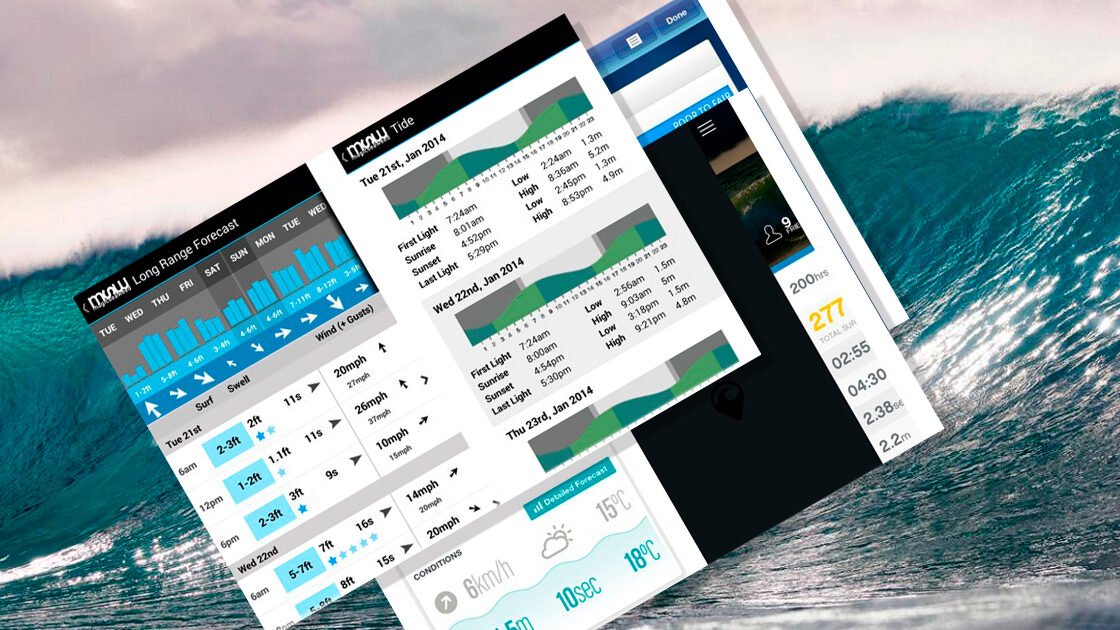
Before surfing, it’s a good idea to check four main factors: swell height, period, direction, and wind. The tide and the beach’s orientation can also have a significant impact on conditions.
1. Swell Height: How Big Will the Waves Be?
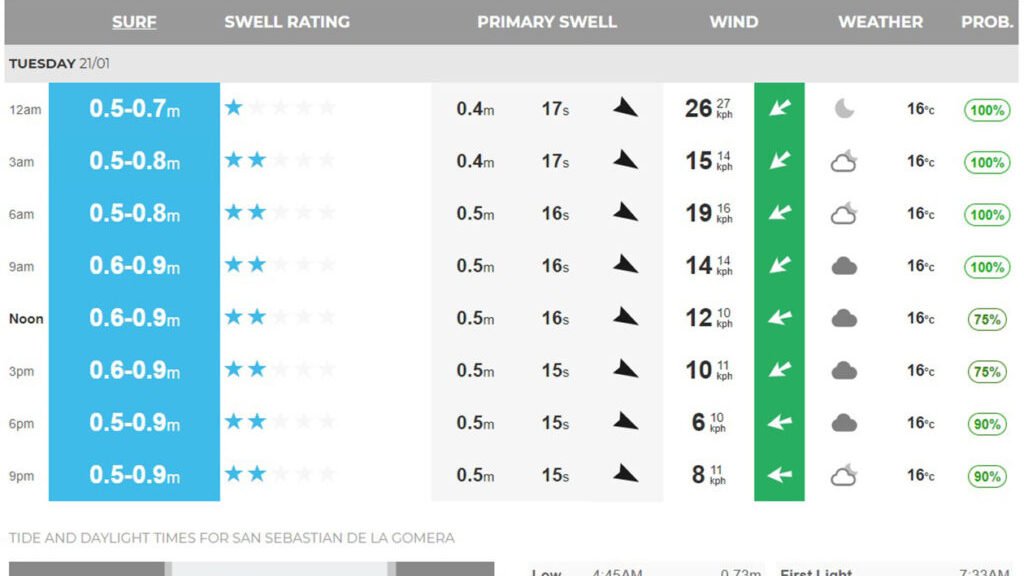
Swell height indicates the estimated size of the swell.
For example, a 1-metre swell can produce different waves depending on the period, direction, and seabed.
Remember that the height shown in a forecast does not always match the exact size of the waves you’ll see at the beach.
2. Period: How Much Energy Do the Waves Have?
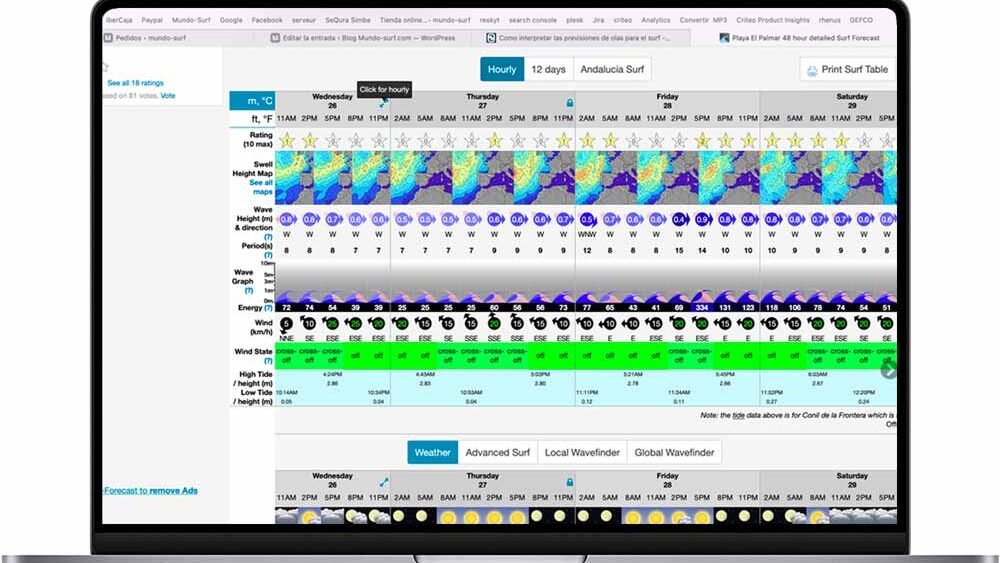
The period indicates the time, in seconds, between consecutive waves.
Short period: Usually associated with less organised swell.
Long period: Generally indicates a swell with more energy and the potential to produce powerful waves.
A long period doesn’t always mean better conditions, especially for beginners.
3. Swell Direction: Where Are the Waves Coming From?
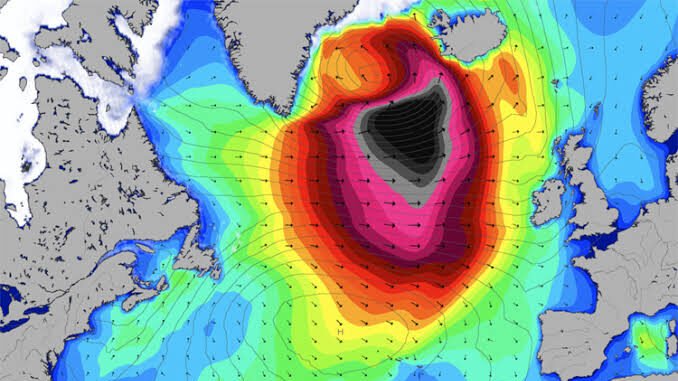
Swell direction indicates where the swell is coming from.
This is important because every beach has a different orientation. One beach may receive good waves while another, relatively nearby, remains sheltered.
In Gran Canaria, checking the swell direction helps you choose which area is likely to offer the best conditions on a given day. A useful resource is Windguru https://www.windguru.cz/238
4. Wind: Will the Waves Be Clean?
Wind has a major influence on wave quality.
Offshore: Blows from land towards the sea and usually creates cleaner waves.
Onshore: Blows from the sea towards land and can make the surface choppy.
Light winds: Generally help create calmer conditions.
The beach’s orientation determines how each wind direction affects the surf spot.
👉 Find out more in our guide to [What wind is better to Surf].
5. Tide: When Is the Best Time to Get in the Water?
The tide can change the depth over the seabed and the way waves break.
Some beaches work better at high tide, while others are better at low or mid tide. There is no single ideal tide for every surf spot.
Before getting in the water, check the forecast and the characteristics of the beach.
👉 Read our guide to [What Tide is better to Surf].
A Practical Example of a Surf Forecast
Imagine this forecast:
Swell height: 1.2 m
Period: 12 seconds
Direction: Northwest
Wind: Light easterly wind
What does it mean?
The swell has a relatively long period and could carry a fair amount of energy. The easterly wind could be favourable at some north- or northwest-facing beaches, but you should check the exact orientation and local conditions.
A forecast is a guide, not a guarantee. Always observe the sea before getting in the water.
How to Choose Good Conditions as a Beginner
If you’re learning to surf, look for:
Small waves, light wind, a beach suited to your skill level, soft currents, and a spot with enough space to practice.
Don’t choose a surf spot simply because the forecast shows small waves. Swell direction, the seabed, and currents also matter.
Conclusion
Learning how to read a surf forecast helps you understand the ocean better and choose when and where to surf.
Remember to check the swell height, period, swell direction, wind, and tide. Then compare the forecast with the actual conditions at the beach.
If you’re just starting out, learning with an instructor will help you recognise suitable conditions and progress with greater confidence.
Discover our [surf lessons in Maspalomas] and learn to surf with guidance tailored to your level.