

One of the most common questions among surfers is choosing between quad or thruster. Both fin setups are very popular in modern surfing, and each offers different sensations in the water.
The right choice can directly influence key aspects of surfing, such as:
- speed
- control
- grip on the wav
- ease of turning
For this reason, understanding the differences between quad vs thruster will help you choose the setup that best suits your style and the ocean conditions.
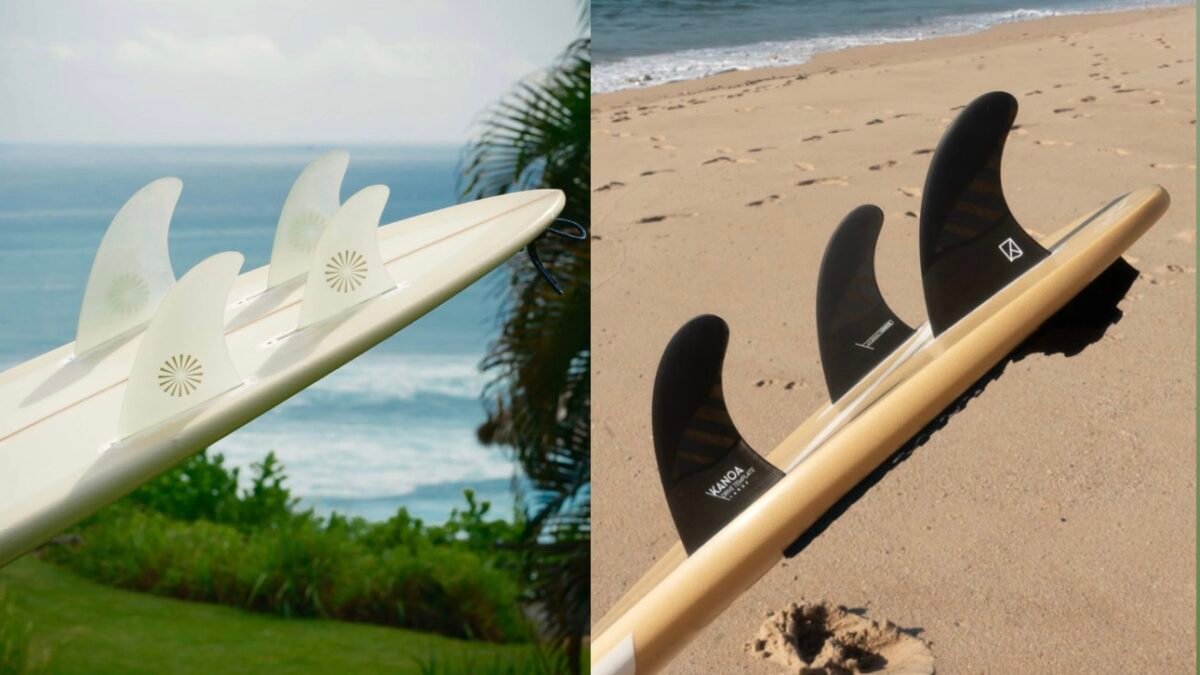
What Is a Thruster Setup?
The thruster is the most widely used fin setup in modern surfing.
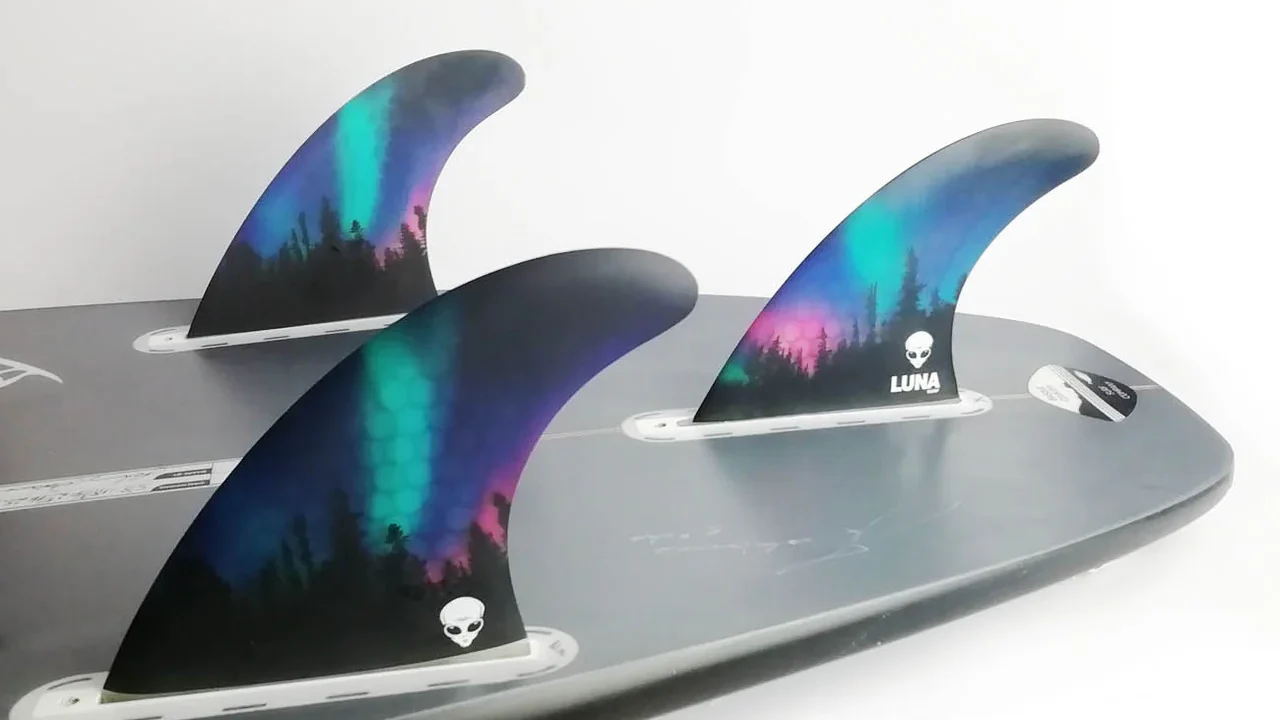
The thruster is the most widely used setup in modern surfing. It consists of three fins of the same size: two side fins and one center fin.
This system was developed in 1980 by Australian surfer Simon Anderson and quickly became the standard for high-performance surfboards.
Thruster Characteristics
- great stability
- excellent control
- precise turns
For this reason, most modern shortboards use this setup.
Thruster Advantages
First of all, it offers a great balance between control and maneuverability.
In addition, the center fin provides more grip on the wave, allowing surfers to perform powerful turns and radical maneuvers.
Thruster Disadvantages
However, the presence of the center fin creates more drag in the water, which can slightly reduce speed.
What Is a Quad Setup?
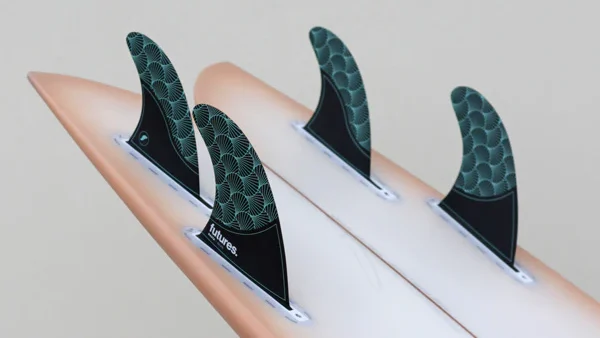
The quad setup uses four fins, two on each side of the board and none in the center.
By removing the center fin, water resistance is reduced, allowing surfers to generate more speed on the wave.
For this reason, many surfers use quad setups in specific conditions.
Characteristics
- higher speed
- good acceleration
- strong hold on fast lines
Advantages
Quad setups make it easy to generate speed, which is especially useful in small or weak waves.
They also perform extremely well in barrels and fast waves, maintaining strong grip even on the higher line of the wave.
Quad Disadvantages
On the other hand, some surfers feel that quad setups have less pivot in vertical turns, which can make very tight maneuvers more difficult.
Differences Between Quad and Thruster
Although both setups work very well, there are clear differences in how they perform.
speed
The quad is usually faster because it doesn’t have a center fin, which reduces drag in the water.
The quad is usually faster because it doesn’t have a center fin, which reduces drag in the water.
Control
The thruster offers greater control, especially in vertical maneuvers.
The center fin acts as a pivot point, allowing for more precise turns.
Maneuverability
The thruster is ideal for radical turns and technical maneuvers, while the quad excels on fast lines and long wave sections.
When to use a Quad
The thruster is more versatile and works well in:
- small waves
- Fast waves
- barrels
- waves with long sections
In these conditions, the extra speed of the quad can make a big difference.
When to use thruster
The thruster is more versatile and works well in:
- medium waves
- big waves
- high-performance surfing
- radical maneuvers
For this reason, it remains the favorite setup of many professional surfers.
Final Thoughts
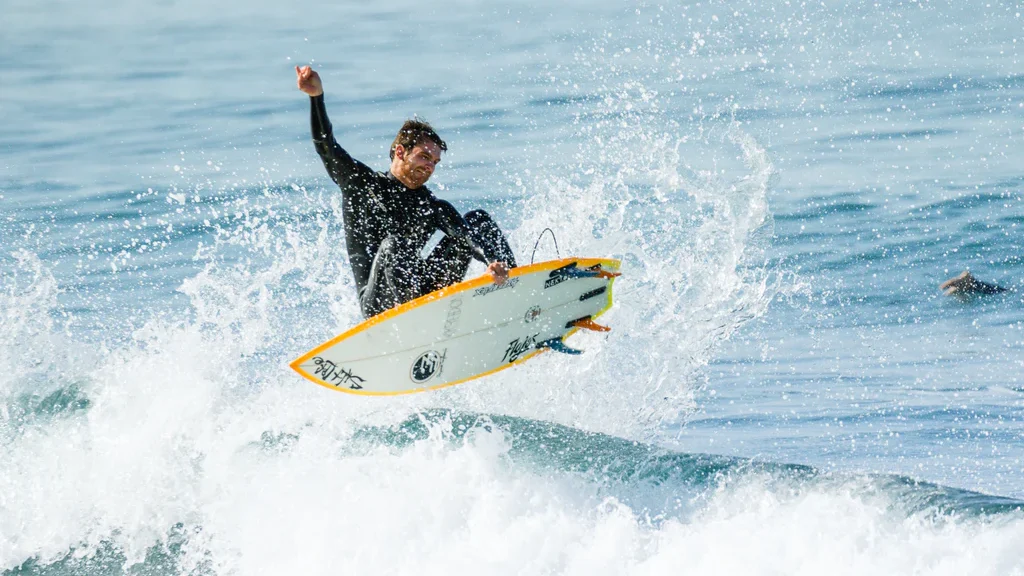
The choice between quad vs thruster mainly depends on the type of waves you usually surf and your style in the water.
If you’re looking for speed and flow, the quad can be an excellent option.
On the other hand, if you prefer control and more technical maneuvers, the thruster remains the most balanced setup.
Many surfers choose boards with a five-fin box system, allowing them to switch between both configurations depending on the ocean conditions.

Quad vs Thruster FAQ
Which is faster, quad or thruster?
The quad is usually faster because it doesn’t have a center fin, which reduces drag in the water.
Which setup do professional surfers use?
Most professionals use thrusters in competitions, since they offer more control for radical maneuvers.
Can you convert a thruster board into a quad?
Yes. If the board has a five-fin box, you can ride it as either a thruster or a quad.
Which setup is better for small waves?
The quad usually works better in small waves because it generates more speed.