

Surf fin setup is one of the most important factors influencing how a surfboard behaves in the water. While many surfers focus only on the board’s shape or size, fins actually determine key aspects such as speed, stability, control, and maneuverability.
In fact, changing the fin setup can completely transform how the same board feels when surfing.
Today, there are also many possible combinations. Fins vary in material, flexibility, size, rake, and angle, as well as in how they are positioned on the board.
For this reason, understanding the most common setups will help you choose the best option based on your skill level and the ocean conditions.
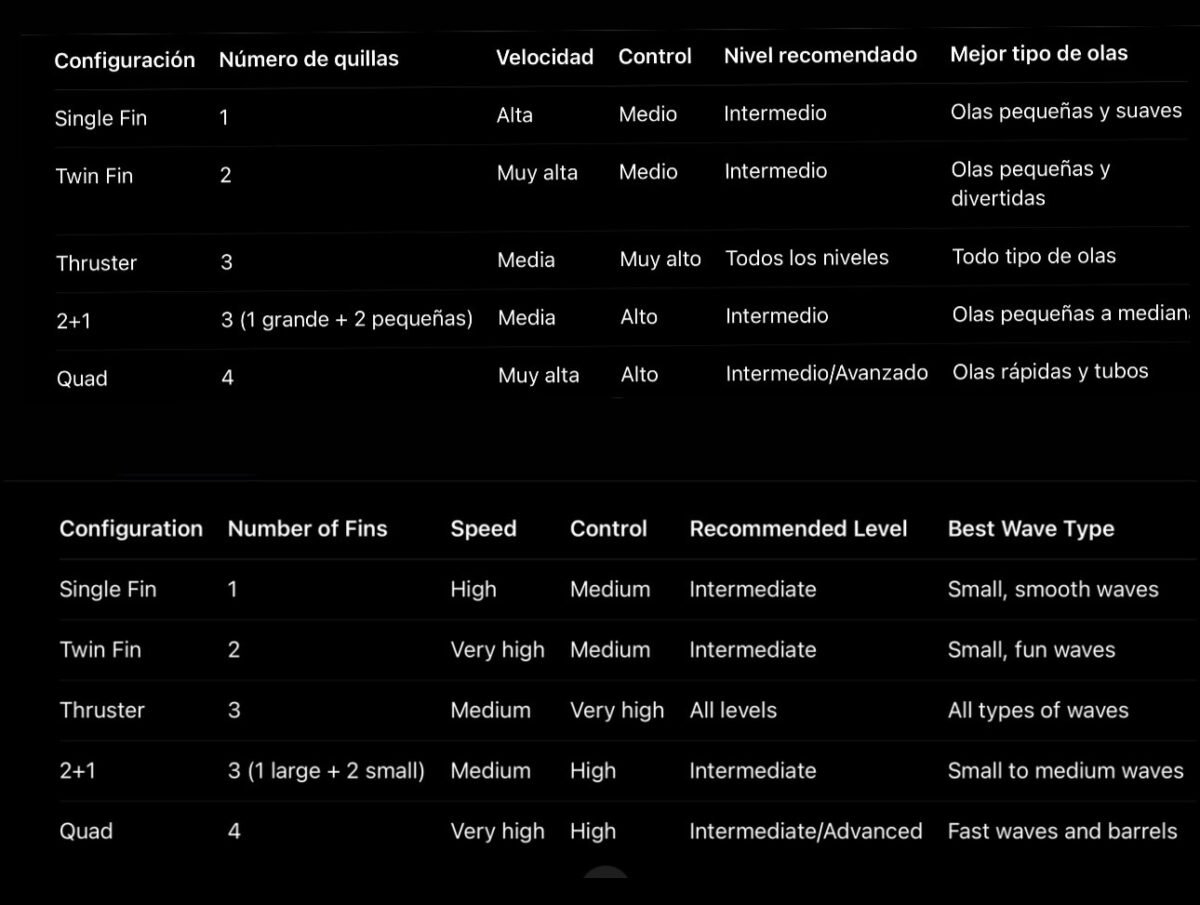
Below, we analyze the most widely used configurations in modern surfing.
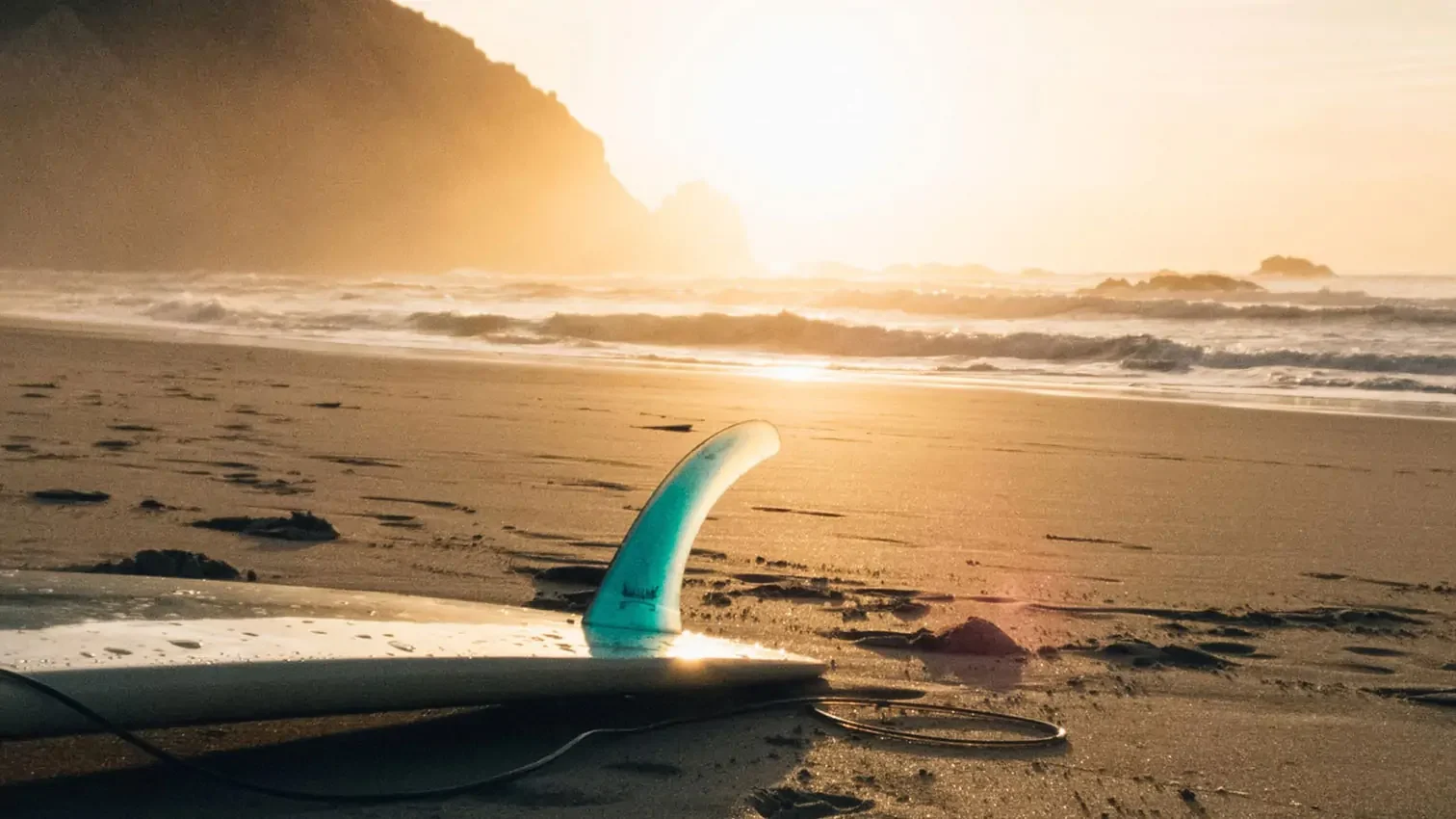
Single Fin: The Classic Surf Style
The single fin setup uses one central fin. It is the most traditional configuration in surfing and is mainly associated with classic longboards.
However, it also appears on some retro boards and mid-lengths.
Single fins are usually larger and wider, providing stability and allowing long, smooth turns.

When to Use a Single Fin
This setup works especially well in:
- Small waves
- Long, mellow waves
- Waves with little power
Advantages
First, a single fin creates less drag in the water, helping maintain good speed.
It also provides a very smooth and elegant surfing feel, ideal for a more classic style.
Disadvantages
On the other hand, control depends more on the surfer. Therefore, it may feel less stable for riders used to modern setups.
Twin Fin: Speed and Fun Surfing
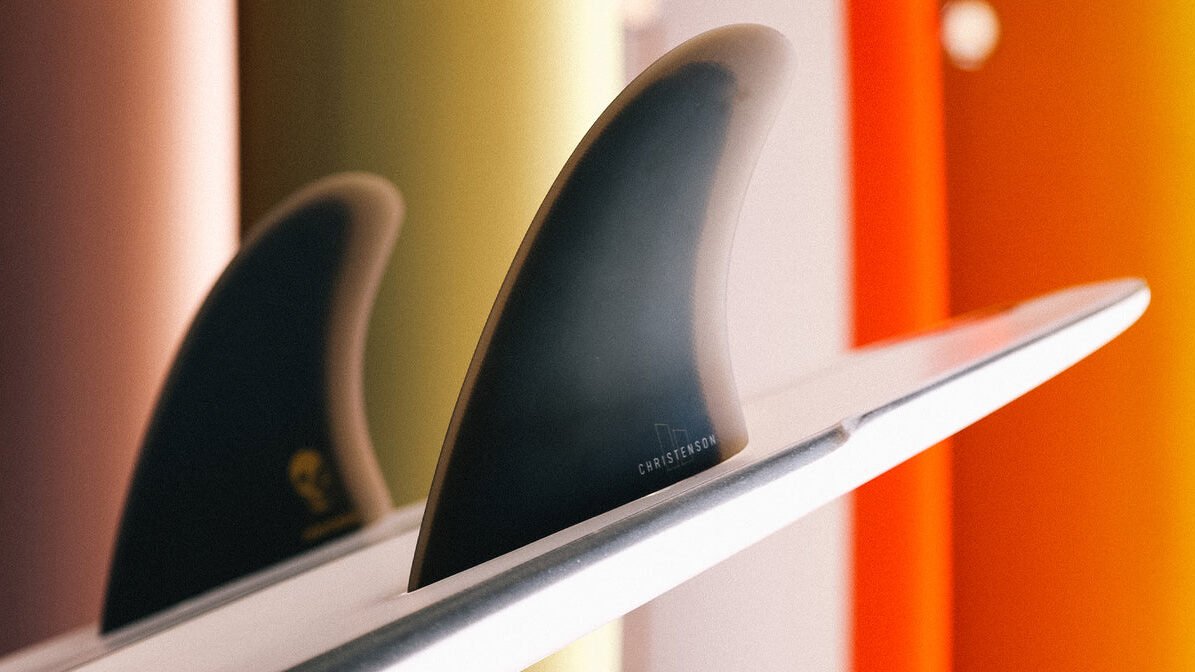
The twin fin setup uses two side fins without a center fin.
This system became famous in the 1970s thanks to Australian surfer Mark Richards, who won four consecutive world titles using fish boards with twin fins.
Since then, this configuration has remained a popular choice for surfing small to medium waves.
Ideal Conditions
- Small waves
- Medium waves
- Fast and playful surfing
Advantages
Twin fins stand out for their great speed and they also allow quick and loose turns, creating a very free surfing sensation.
Disadvantages
However, in larger waves they can feel too loose, which may cause the tail of the board to lose grip.
Thruster: The Most Versatile Setup
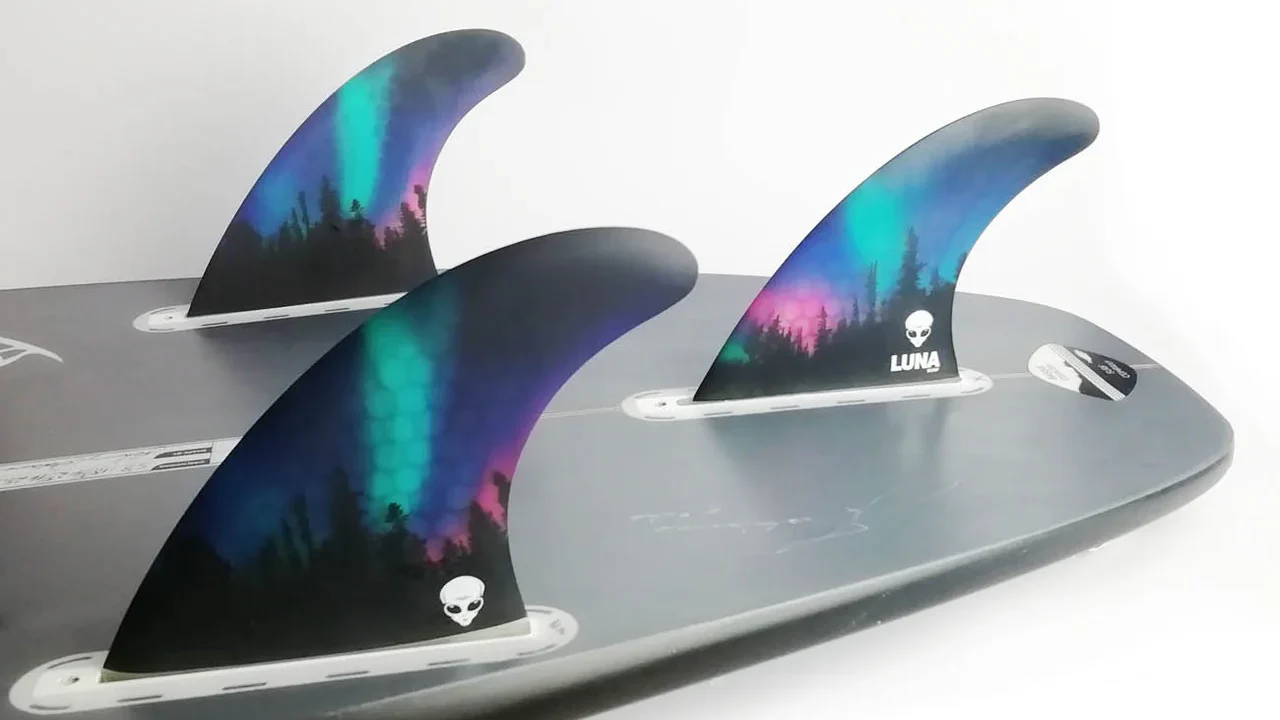
The thruster is the most widely used fin setup in modern surfing.
It consists of three fins of the same size: two side fins and a center fin placed slightly further back.
It was created in 1980 by Australian surfer Simon Anderson, who was looking for more control in powerful waves.
Today, it is the standard setup for most high-performance shortboards.
Ideal Conditions
One of its biggest advantages is that it works in almost all conditions.
Advantages
First, it offers excellent stability and control that allows powerful and precise maneuvers, making it the preferred option for high-performance surfing.
Disadvantages
However, the center fin creates more drag in the water, which can slightly reduce speed compared to other setups.
2+1 Setup: Balance for Longboards
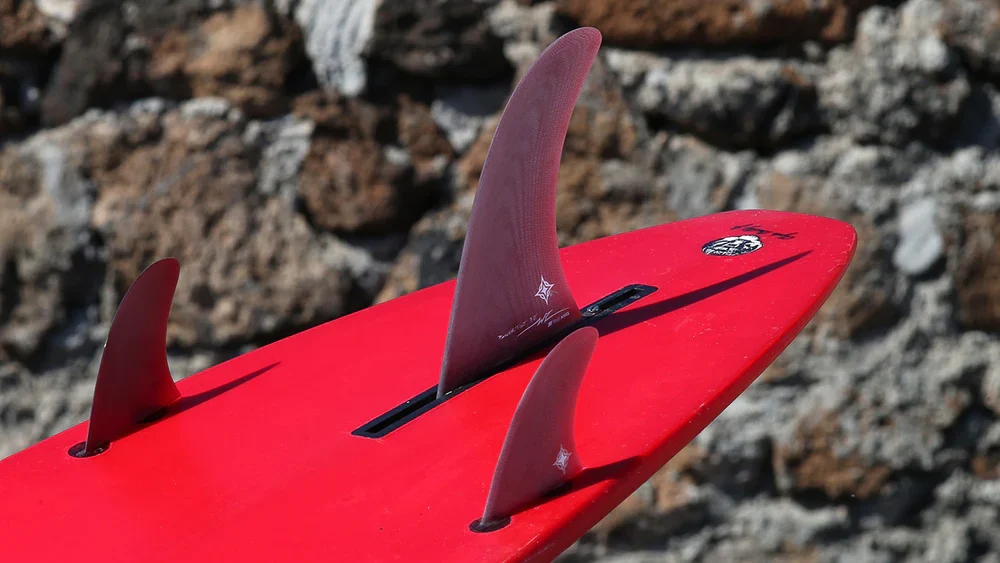
The 2+1 setup combines a large center fin with two small side fins called sidebites.
This system is very common on modern longboards because it offers a balance between classic style and modern control.
Ideal Conditions
It works well in:
- Small waves
- Medium waves
- Slightly messy conditions
Advantages
Thanks to the sidebites, the board gains more control when riding on the rail and also provides greater stability than a single fin.
Disadvantages
On the other hand, having three fins creates more drag in the water, which may slightly reduce speed.
Quad Fin: Maximum Speed
The quad setup uses four fins, two on each side of the board.
Since it has no center fin, it reduces drag and allows the board to generate more speed.
For this reason, many surfers use quad fins in fast waves or barrels.

Ideal Conditions
- Clean waves
- Small to medium waves
- Barrels
Advantages
First, it is one of the fastest setups and also provides strong grip when riding fast lines on the wave.
Disadvantages
However, it requires some adaptation, so it is usually not the easiest option for beginners.
Final Thoughts
Choosing the right surf fin setup can make a big difference in your performance in the water.
If you are looking for a versatile option, the thruster remains the most balanced configuration.
However, if you want to experiment with speed and different sensations, trying twin or quad fins can open new possibilities in your surfing.
For this reason, many surfers prefer boards with a five-fin box, since it allows them to test different setups depending on the ocean conditions.
And if you need help choosing your board based on your level visit https://www.southcoastsurfschool.com/how-to-choose-a-surfboard-according-to-your-level/