

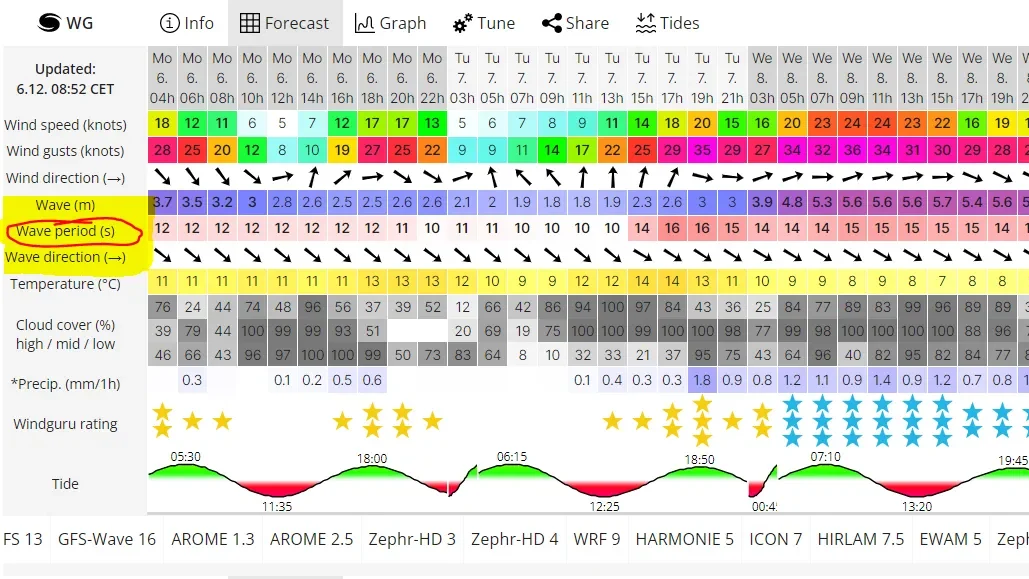
When you look at a surf forecast, you’ve probably seen something like: 1.2 m – 12 seconds – NW, and perhaps asked other surfers when you heard it: What is wave period?
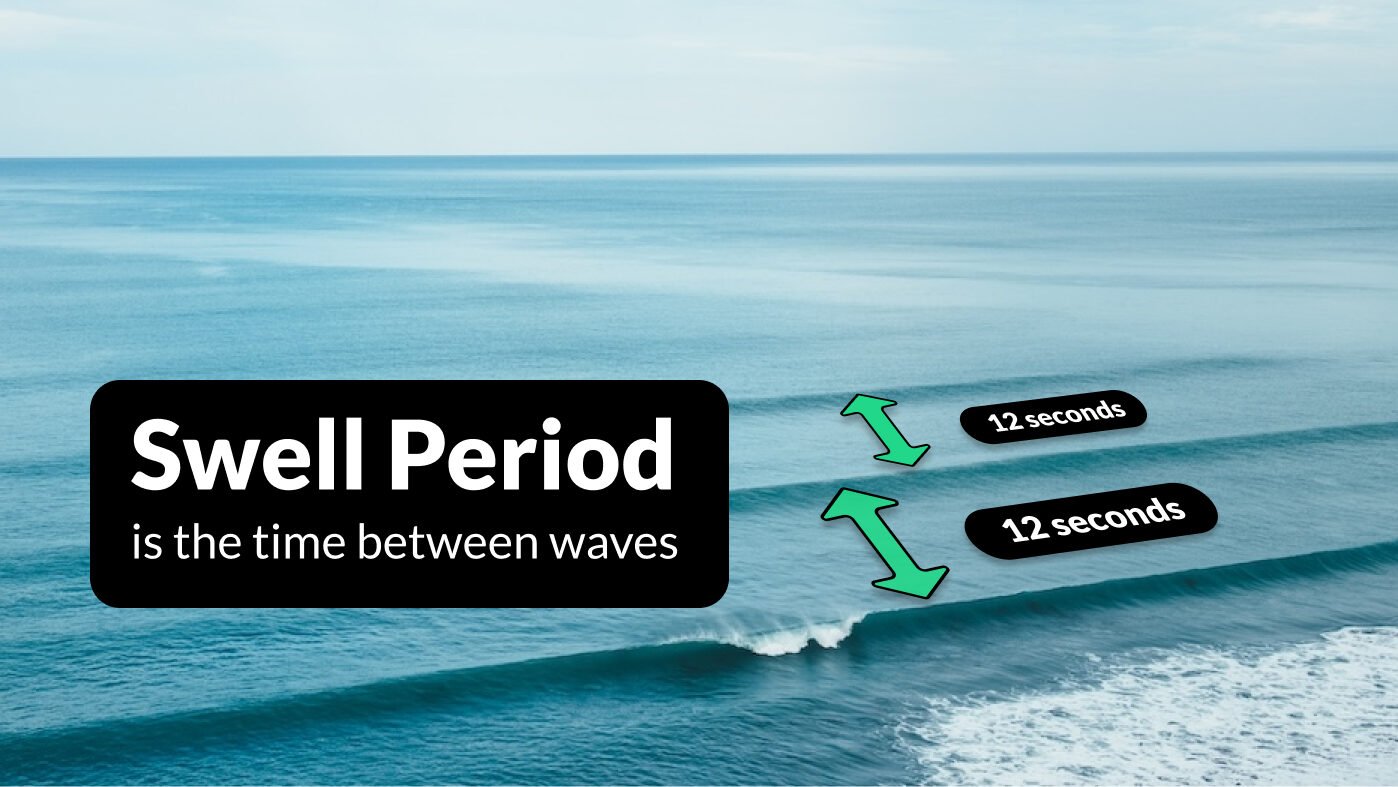
Wave period indicates how many seconds pass between one wave and the next at the same point.
For example, a 12-second period means that approximately 12 seconds pass between waves.
Although it may seem like a simple piece of information, it is very important for understanding the energy and behavior of a swell.
What Does a Long Wave Period Mean?
A long period means there is more time between waves.
Generally, a long-period swell has more energy and can produce more powerful waves when it reaches the coast.
For example:
- 1 m @ 7 seconds: a shorter-period swell that is normally less energetic.
- 1 m @ 14 seconds: a swell with much more energy.
That’s why swell height doesn’t tell you everything.
You can use this link to check forecasts from around the world https://www.windguru.cz/299661
What Does a Short Wave Period Mean?
A short period means that waves arrive with less time between them.
It is often associated with nearby wind or with a swell that hasn’t traveled a long distance.
These waves can be smaller, faster, and more disorganized.
Why Is Wave Period Important for Surfing?
Wave period should be analyzed together with other factors:
- Swell height
- Swell direction
- Wind
- Tides
- Seabed
The same forecast can produce completely different conditions at two different beaches.
This is especially important not only in Gran Canaria, but at beaches everywhere, where the orientation of each beach determines which swells it receives.
What Wave Period Is Best for Beginners?
A long period does not necessarily mean that the conditions are better for learning to surf.
For beginners, it is more important to find:
- Small waves
- Light winds
- A wave that breaks predictably.
- A beach that is suitable for learning.
The goal is to find easy and safe conditions, not necessarily the most powerful swell.
Wave Period and Sets
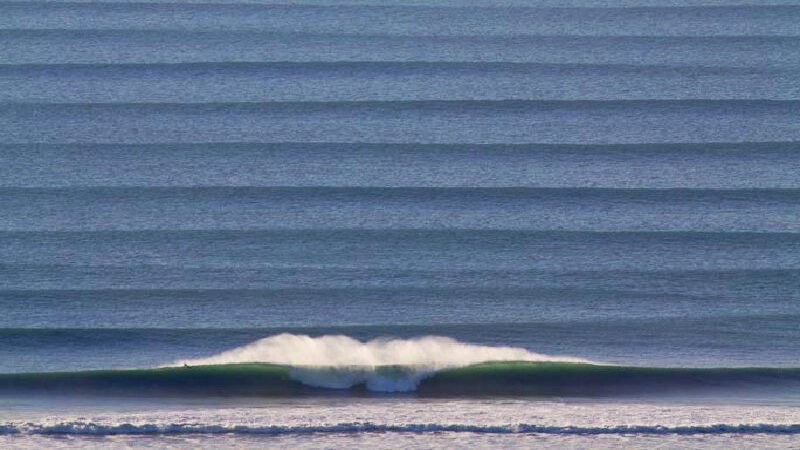
The wave period also helps explain why waves arrive in sets.
Learning to watch the horizon and recognize swell patterns can help you improve your positioning and catch more waves.
You can also read our article about [por qué las olas vienen en series].
Conclusion
When you check a surf forecast, don’t look only at the wave height.
Remember:
Height + period + swell direction + wind + tide = actual surf conditions.
Understanding wave period will help you interpret the ocean better and choose when and where to surf.
👉 If you want to learn how to read conditions while improving your technique, discover our [ surf lessons in Gran Canaria] y [ surf lessons in Maspalomas].